



newbg

Guide of Mineral Processing Methods: 3 Main Beneficiation

Published time:11 June 2021

Introduction to Mineral Processing

Mineral processing is essential for extracting valuable minerals from raw ores. The field primarily divides into two categories:

  • Physical beneficiation: Utilizes physical properties of minerals
  • Chemical beneficiation: Leverages chemical characteristics

Physical Mineral Processing

Physical beneficiation includes magnetic separation, gravity separation, electrostatic beneficiation, friction beneficiation, particle size beneficiation, shape beneficiation, corona beneficiation, and manual beneficiation.

Chemical Mineral Processing

Chemical mineral processing includes the flotation method (physical and chemical mineral processing is the actual flotation), calcination method, leaching method (bacterial leaching and reagent leaching), mixed mercury method, and cyanidation method.

This guide focuses on the three most widely used methods: flotation, magnetic separation, and gravity separation.


3 Main Mineral Processing Methods

Flotation

Flotation is a mineral processing method that uses the different physical and chemical properties of mineral surfaces to separate minerals. Foam flotation is widely used in industry. It is characterized by selectively attaching minerals to the air bubbles in the pulp and then floating up to the surface of the ore slurry to achieve the separation of useful minerals from gangue.

Before flotation, the ore should be ground to the size required by flotation, so that the useful minerals can basically achieve monomer dissociation for separation. And adding a flotation reagent. During flotation, air is introduced into the pulp to form a large number of bubbles. Therefore, particles that are not easily wetted by water(commonly known as hydrophobic minerals) are attached to the bubbles and form a mineralized foam layer along the bubble to the surface of the slurry. The particles that are easily wetted by water(commonly known as hydrophilic minerals), they cannot adhere to the bubbles and remain in the pulp. The purpose of separation is to discharge the mineralized foam.

Direct Flotation & Reverse Flotation
In general, the useful minerals are floated into the foam products, leaving gangue minerals in the pulp. This flotation is usually called positive flotation. But sometimes gangue minerals float into foam products, leaving useful minerals in the pulp, which is called reverse flotation.

Preferential Flotation & Mixed Flotation
If the ore contains two or more kinds of useful minerals, there are two flotation methods. One is called preferential flotation, where the useful minerals are selected into a single concentrate one by one. The other is called mixed flotation, where the useful minerals are selected as mixed concentrate at the same time, and then the useful minerals in the mixed concentrate are separated one by one.

Application
Flotation has a wide range of applications; most of the ores can be treated by flotation. More than 90% of nonferrous metal (copper, lead, zinc, etc.) ores are separated by flotation.

Advantages and Disadvantages
The flotation method has high separation efficiency. It can effectively separate low-grade ore into high-grade concentrate, especially for the ore with fine-grained distribution and complex composition. When the flotation method is used, it can often achieve a good separation effect. But the flotation method must use a flotation reagent, so its mineral processing cost is generally higher than that of the gravity separation method and the magnetic separation method.

To view our flotation equipment


Fluorite flotation
Fluorite flotation

Magnetic Separation

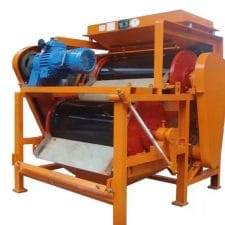
Minerals are divided into strong magnetic minerals, weak magnetic minerals, and non-magnetic minerals. Magnetic separation is a mineral separation method in a heterogeneous magnetic field according to the difference in mineral magnetism in ore. Magnetic separation is mainly used for magnetic oxide minerals of ferrous minerals, such as magnetite, V-Ti magnetite, hematite, and ilmenite, and also for pyrrhotite beneficiation.

Magnetic separation is the concentration of ilmenite. It uses the different permeability of various minerals to make them pass through a magnetic field. Because different minerals react to the magnetic field differently, minerals with high permeability are sucked up by the disk, and then they fall off. After collecting them through an aggregate funnel, the low permeability will not be absorbed, and the belt left in the material or rotating can be separated as tailings.

To view our magnetic separator


magnetic and gravity separation

Gravity Separation

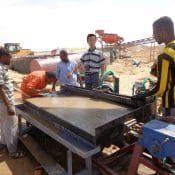
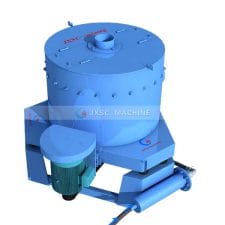
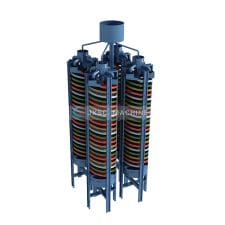
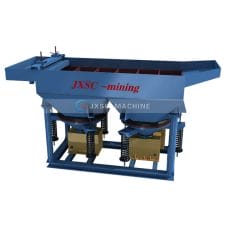
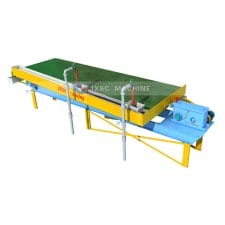
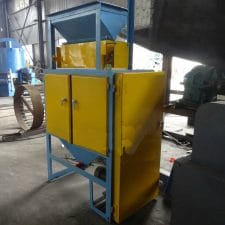
Gravity separation, also known as gravity dressing. It refers to the mineral processing method that makes use of the difference of relative density, particle size, and shape of the separated mineral particles and the difference of movement speed and direction in the medium (water, air, or other liquid with relatively high density) to separate them.

Application
Compared with other mineral processing methods, gravity separation has the advantages of large processing capacity, a wide range of particle size, simple equipment structure, no consumption of valuable production materials, low operation cost, and no pollution, so it is widely used in the beneficiation of tungsten and tin ores. It is also widely used in the separation of ferrous metals (iron, manganese, chromium), rare metals (tantalum, niobium, thorium, zirconium, titanium, etc.), and precious metal ores.

Gravity separation is also the main method of coal processing. Gravity separation is also used to separate non-metallic minerals such as pyrite, apatite, diamond, and asbestos from coal measures. For those nonferrous metal ores (copper, lead, zinc, etc.) that are mainly treated by flotation, heavy medium mineral processing can also be used to remove coarse gangue or surrounding rock in advance to achieve preliminary enrichment. Classification and dehydration of gravity separation are indispensable in almost all concentrators.

Advantage

  1. The production cost is low.
  2. The particle size range of the material that can be treated is wide, the coarse can reach hundreds of mm, and the fine can reach 0.02mm.
  3. It has less pollution to the environment, and the product is easy to dehydrate. But for less than 0.1 mm ore and 0.5 mm coal, the beneficiation efficiency and equipment processing capacity are low.

To view our gravity separator


Summary: A Comparative Guide to Three Core Mineral Processing Separation Methods

This article systematically introduces the three most widely used separation methods in mineral processing: flotation, magnetic separation, and gravity separation, providing a professional reference for selecting beneficiation processes.

Key Conclusions:

  • Flotation, as a combined physical-chemical process, excels at processing complex, fine-grained sulfide ores (copper, lead, zinc, etc.), offering high separation accuracy but with high reagent costs. It is suitable for over 90% of non-ferrous metal beneficiation applications.
  • Magnetic separation has significant advantages for magnetic minerals such as iron ore and ilmenite, handling a wide particle size range (0.1-50mm). Its simple equipment structure and low pollution make it the preferred solution for ferrous metal beneficiation.
  • Gravity separation, with its zero reagent consumption, ultra-large particle size handling capacity (0.02-100mm), and extremely low environmental impact, has become an economical and efficient choice for tungsten-tin ore and coal beneficiation. However, its recovery efficiency for fine particles is limited.

    Contact Us Now

    Privacy Overview
    logo

    This website uses cookies so that we can provide you with the best user experience possible. Cookie information is stored in your browser and performs functions such as recognising you when you return to our website and helping our team to understand which sections of the website you find most interesting and useful.

    Strictly Necessary Cookies

    Strictly Necessary Cookie should be enabled at all times so that we can save your preferences for cookie settings.

    3rd Party Cookies

    This website uses Google Analytics to collect anonymous information such as the number of visitors to the site, and the most popular pages.

    Keeping this cookie enabled helps us to improve our website.