




newbg

Gold And Silver Heap Leaching

Published time:31 December 2024

Heap leaching of gold and silver ores is a wet metallurgical technology for extracting precious metals from low-grade gold and silver ores. It recovers gold and silver by stacking the ore in a leak-proof yard and spraying the leaching agent solution, so that the gold and silver are dissolved from the ore into the leaching solution, then recovered through solution treatment.


Basic Principle of Heap Leaching

Heap leaching is based on the principle of chemical leaching. The leaching solution penetrates through the ore heap and reacts chemically with the gold and silver in the ore, causing the gold and silver to dissolve in the liquid in the form of complexes. Common chemical reactions are listed below:

Cyanidation method (commonly used)

  • Gold Leaching: 4Au+8NaCN+O2+2H2O→4Na[Au(CN)2]+4NaOH
  • Silver Leaching: 4Ag+8NaCN+O2+2H2O→4Na[Ag(CN)2]+4NaOH

For some specific ores, leaching with other agents, e.g. thiosulphates or chlorides.


The development of gold ore processing plant Silver


Heap Leaching of Gold And Silver Ores Application Scope

  • Low-grade ores: Heap leaching is used to extract low-grade gold and silver ores, which have low gold and silver content and are often inefficiently treated.
  • Large-scale mining: Heap leaching is suitable for large-scale mining, which can realize the rapid processing of a large number of ores and improve production efficiency.
  • Environmental protection requirements: Heap leaching is more environmentally friendly compared to traditional smelting methods, and can reduce the pollution of water resources and the atmosphere, in line with the requirements of modern society on environmental protection.
  • Low-cost requirements: Compared with traditional extraction methods, the heap leaching method is relatively low-cost and suitable for more sensitive cost requirements of the project.

Heap leaching of gold and silver ores is suitable for processing low-grade gold and silver ores, gold-bearing smelting slag, high-grade tailings, and large waste quarries. Due to its low cost and simple operation, it is widely used in the industrial production of gold and silver mines.


Gold and Silver Ore Heap Leaching Process

Crushing and Screening

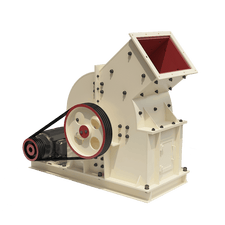
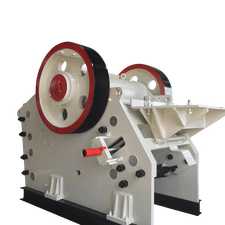
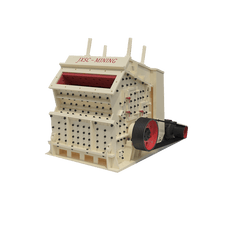
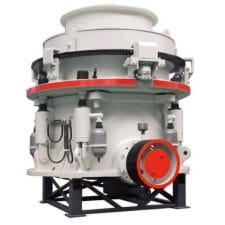
Crushing the raw ore to the appropriate size, usually using two sections and a closed-circuit screening crushing process to ensure that the ore size meets the requirements of heap leaching and improves the exposure area of gold and silver.

Stacking

The crushed ore is stacked in the open field to form a leach heap. The heap leach pile usually adopts a specific stacking structure to ensure that the solution can uniformly penetrate the entire heap (the height is controlled within 5 meters, to ensure that the drug effectively penetrates). The bottom of the pile is covered with a leak-proof floor mat to prevent the loss of precious liquid.

Spraying of leaching solution

A spraying system is used to evenly spray the solution containing leaching agents such as cyanide onto the heap leaching pile. The leaching agent in the solution will form stable cyanide complexes with gold and silver and gradually dissolve the gold and silver into the solution.

Collection of solution

The solution containing gold and silver will be collected into the collection tank through the designed collection system.

Precious liquid-activated carbon adsorption

The precious liquid of the gold mine leached out is adsorbed by activated carbon through an adsorption column, and the adsorbed gold-carrying carbon is stored for desorption and electrolysis.

Gold and silver extraction

The collected gold and silver solution is sent to the extraction equipment, and the gold and silver are extracted from the solution by a specific extractant.

Gold and silver refining

The adsorbent or replacement precipitate is roasted, dissolved, reduced, and treated in other ways to ultimately extract high-purity gold and silver.

Residue treatment

Handle the residue after leaching, usually using solid-liquid separation, leach recovery, and other methods to reduce waste emission.


Gold And Silver Heap Leaching


Gold and Silver Ore Heap Leaching Advantages & Disadvantages


Advantages

  • Environmental protection
    The heap leaching method does not need a lot of chemicals and high temperature and pressure conditions, which reduces the pollution to the environment. Equipped with an impermeable matting and tailing liquid treatment system, pollution can be effectively controlled.
  • Low cost
    Compared with traditional extraction methods, the heap leaching method has lower investment and operating costs, which is conducive to reducing production costs. The heap leaching method does not require expensive equipment and complex processes, and is suitable for processing low-grade ores, unit investment costs, and lower operating costs; the heap leaching process mainly relies on gravity and natural conditions, without a lot of energy support.
  • Strong adaptability
    The heap leaching method is suitable for large-scale processing of ores, especially in the open pit. The economic recovery of low-grade gold and silver ores is particularly significant, usually less than 1 g/t grade ore is the ideal object.
  • High extraction rate
    The heap leaching method can realize the efficient extraction of gold and silver ore, a high extraction rate, that can maximize the use of resources.
  • Simple process
    The process is simple, with a high degree of automation, suitable for large-scale continuous operation. The heap leach pile can be increased or decreased according to the production demand.
  • Flexible construction
    The construction of the heap leach site can utilize the abandoned area of the mine, saving land resources. The construction period of the heap leach site and equipment is relatively short, and it can be put into production quickly.


Disadvantages

  • Long leaching time
    The heap leaching process relies on the penetration and chemical reaction of the liquid and usually takes months or even years to complete the extraction process, which is not suitable for situations where rapid recovery of gold and silver is required.
  • Restricted by climatic conditions
    Heap leaching may be disturbed by excessive precipitation or extreme cold conditions, requiring additional protection. The heap leaching process requires large amounts of water, which may pose a challenge for implementation in mines in arid regions.
  • Large land occupation
    Heap leaching requires a large amount of land for ore stockpiling and solution treatment facilities, which places a high demand on land resources.
  • Requirements on ore properties
    The ore needs to be crushed to a suitable particle size (10-50 mm), and either too large or too fine a particle size will affect leaching efficiency. For ores containing more clay, complex minerals, or difficult-to-leach ores (e.g. sulfide ores), the heap-leaching effect is poor.


In the mining industry, the extraction of gold and silver ores has always been a hot topic. Traditional extraction methods often require a large amount of resources and energy and hurt the environment. Therefore, in recent years, heap leaching has attracted much attention as a new ore extraction technology. As a new type of ore extraction technology, heap leaching of gold and silver ores has significant advantages in improving resource utilization, reducing production costs, and protecting the environment. However, its disadvantages such as the long operation cycle and the great influence of weather also need to be emphasized. Through continuous technological innovation and process improvement, it is believed that the heap leaching of gold and silver ores will be more widely used in the future, and make greater contributions to the sustainable development of the mining industry.

    Contact Us Now