







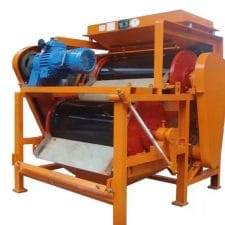
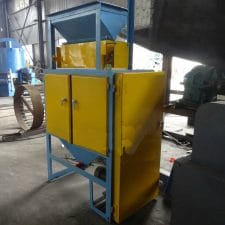
In mineral processing operations, three-disc dry magnetic separators represent a critical junction between efficiency and reliability. As dry high-intensity workhorses capable of separating weakly magnetic minerals with precision, these systems require specialized knowledge to operate at peak performance. This comprehensive guide combines engineering insights with practical maintenance wisdom – offering plant operators, maintenance technicians, and process engineers a holistic resource covering everything from fundamental working principles to advanced troubleshooting methodologies.
The three-disc magnetic separator is a common dry high-intensity magnetic separator, primarily used for separating weakly magnetic minerals. The following is a summary of its technical specifications and maintenance methods based on publicly available technical information:
Core Technology and Working Principle
The three-disc magnetic separator achieves layered separation based on differences in mineral magnetic properties. Its core design utilizes a three-disc gradient magnetic field: the magnetic field strength of the three independent disks increases sequentially, separating minerals with different magnetic grades. The upper disk (low magnetic field) adsorbs strongly magnetic minerals, the middle disk (medium magnetic field) captures moderately magnetic minerals, and the lower disk (high magnetic field) separates weakly magnetic minerals.
Typical Parameters: The common model 3PC-600 has a disk diameter of 600mm, a rotation speed of 36r/min, a magnetic field range of 1200-12000Gs, a suitable particle size of 0.02- 2 mm, a processing capacity of 0.1-0.5t/h, and a separation efficiency ≥85%. High-end models can achieve a magnetic field strength of up to 20000 Gauss.
Process: Material is evenly conveyed between rotating magnetic discs via a vibrating feeder. Magnetic particles are adsorbed into the high-gradient zone of the discs and released through the discharge chute as the discs rotate. Non-magnetic materials are discharged directly from the end of the conveyor belt.
Applications: Widely used for the separation and purification of magnetic minerals such as iron ore, rare earth ore, tantalum-niobium ore, and ilmenite. It can also be used for impurity removal from non-metallic materials such as quartz sand and kaolin, as well as for the recovery of magnetic metals from industrial waste.
Understanding these operational fundamentals lays the groundwork for appreciating the separator’s physical architecture. Like a precision watch, each mechanical component plays a deliberate role in achieving consistent mineral separation – a synchronicity we’ll now examine through the machine’s structural anatomy.
Structural Composition
The main structure of a common three-disc belt magnetic separator includes:
Core Magnetic System: Three independent magnetic discs (mostly using neodymium iron boron permanent magnets or electromagnets to form a gradient magnetic field)
Conveying System: Conveyor belt, vibrating feeder, drive motor, rollers
Frame Auxiliary: Support frame, discharge chute, scraper, adjusting mechanism (adjustable magnetic field strength, belt speed, and disc gap)
With this structural blueprint in mind, we transition from what the separator IS to how we sustain its capabilities. Proper maintenance isn’t mere preservation – it’s performance optimization that pays dividends in uptime, separation efficiency, and total cost of ownership.
Daily Maintenance and Care for Three-Disc Magnetic Separators
Key Maintenance Procedures
1. Lubrication Schedule
Proper lubrication reduces friction, prevents wear, and extends component life.
Gear Reducer
- Initial oil change: Replace lubricant after the first month of operation.
- Subsequent changes: Every 6 months.
- Recommended oil: Shell Omala 220#.
- Daily monitoring: Ensure oil level does not fall below the minimum mark.
Bearings
- Weekly greasing: Apply 2–3ml of lubricant to drum bearings.
- Deep maintenance: Clean and repack bearings with fresh grease every 6 months.
- Recommended grease: Shell Alvania R2 or 3# lithium-based grease.
Drive Chains & Sprockets
- Monthly lubrication: Apply 200ml of 3# lithium-based grease to prevent wear.
2. Regular Inspections & Upkeep
Weekly Checks
- Clean feed and discharge chutes to prevent blockages.
- Inspect structural integrity for cracks or deformations.
- Monitor rotating components (never touch while operating).
Monthly Checks
- Chain & Sprockets:
- Replace worn chains; adjust tension.
- Check sprocket alignment (max. 1mm deviation).
- Fasteners: Tighten all bolts (motor, gearbox, frame).
- Discharge System:
- Ensure level discharge weir.
- Verify magnetic angle for smooth material flow.
3. Pre- & Post-Operation Practices
Before Starting
- Verify lubrication and tighten loose fasteners.
- Clear debris from chutes.
- For wet operations: Initiate flushing water first.
After Shutdown
- Dry type: Remove residual material.
- Wet type: Rinse chutes thoroughly before stopping.
Critical Maintenance Focus Areas
1. Drive System
- Daily belt tension checks (deflection ≤5mm).
- Weekly cleaning of drum surfaces; monitor bearing temperature (≤65°C).
- Address excessive vibration (>0.1 mm/s) or oil leaks immediately.
2. Magnetic System & Separation Components
- Remove non-magnetic debris daily.
- Weekly magnetic field checks (±5mT tolerance).
- Replace worn liners (<5 mm thickness) to avoid disk damage.
3. Electrical & Control Systems
- Inspect terminals and contacts daily.
- Monthly insulation tests (≥2MΩ); calibrate sensors.
- Ensure grounding resistance ≤4Ω during storms.
4. Cleaning & Documentation
- Keep equipment free of dust buildup.
- Log operational data (throughput, field strength, amperage) for predictive maintenance.
5. Spare Parts Management
- Stock belts, liners, and bearings.
- Replace belts every ~8,000 hours; ensure precise alignment.
A well-maintained three-disc magnetic separator delivers consistent performance, reduces unexpected breakdowns, and extends service life. By adhering to structured lubrication, inspection, and cleaning routines—coupled with proactive spare parts management—operators can optimize separation efficiency and minimize operational disruptions. Always prioritize safety and refer to manufacturer guidelines for specific model requirements.
Even with rigorous maintenance, industrial equipment occasionally reveals operational mysteries. The following troubleshooting matrix transforms vague symptoms into actionable insights – a diagnostic compass for navigating real-world challenges.
Troubleshooting for Three-Disc Magnetic Separators
| Fault | Symptoms | Causes | Troubleshooting |
| Electrical | Abnormal voltage and current readings | Power supply quality issues | Inspect and coordinate a solution |
| Damage to the electricity meter or electrical components | Inspect, repair, or replace | ||
| Electrical leakage | Damaged wiring causing a short to ground | Inspect and resolve | |
| The contactor fails to stop automatically or fails to close | Supply voltage is too low | Increase the supply voltage | |
| The pull-in coil is burned out | Replace the coil | ||
| The neutral wire is not properly connected | Connect the neutral wire properly | ||
| Maximum DC Current reduced by half | One rectifier tube is open-circuited | Replace | |
| Fuse blown | Rectifier tube shorted | Replace | |
| Short circuit in the circuit or coil | Inspect and repair | ||
| Magnetic field orientation is incorrect | Coil terminals are loose or disconnected | Tighten the terminals | |
| DC wiring is incorrect | Reconnect the wires correctly | ||
| Sparking from the voltage regulator | Partial coil burnout | Repair or replace | |
| Four irregularities on the sliding surface | Sand smooth with wet sandpaper | ||
| Brushes are burnt out | Replace | ||
| Indicator light is not lit | Power failure | Troubleshoot and repair | |
| Indicator light is faulty | Replace | ||
| Mechanical
|
Conveyor belt or drive belt slipping | Belt is not tensioned | Adjust the tensioning screw |
| Conveyor belt running out of alignment | Conveyor rollers are not parallel | Adjust the tensioning screw | |
| Gearbox damage | Damaged bearings or gears | Inspect and repair or replace | |
| Mineral Processing | Uneven distribution of material on the conveyor belt | The material distribution plate on the round-spout hopper is not properly adjusted | Adjust the material distribution plate |
| The opening of the trough-spout hopper is uneven | Trim it properly
|
||
| Mineral that should not have been screened out is being carried away | Output is too high | Reduce the feed rate | |
| Particle size is too coarse or too fine | Screen properly | ||
| The working clearance of the magnetic disc is too small | Raise the magnetic disc | ||
| Magnetic field strength is too high | Reduce it | ||
| Mineral contamination | Clean | ||
| Agglomerates | Crush and liberate | ||
| Output is too high | Feed rate is too high | Adjust the feed control valve | |
| Output is too low | Feed rate is too low | Adjust the discharge control valve |
Conclusion
Mastering three-disc magnetic separator operations is an exercise in balancing scientific precision with mechanical vigilance. From the nuanced magnetic field gradients that sort microscopic particles to the tactile maintenance of drive systems, this technology demands both intellectual understanding and hands-on care. By internalizing these technical principles and procedural best practices, operations teams can transform routine maintenance from a cost center into a strategic advantage – ensuring consistent mineral recovery rates while minimizing unplanned downtime. Remember: in magnetic separation, consistency begins with conscientiousness.
LATEST PRODUCTS
-
Cyclosizer
【Feeding Capacity】< 100g/time 【Feeding …
-
JKZ/2JKZ Mine Shaft Sinking Hoist
【Power Source】Electric Motor Drive 【Motor Spee…
-
JK(B)/2JK(B) Mine Hoisting Winch
【Capacity】 6-17 Tons 【Drum Number】1-2 【…


