




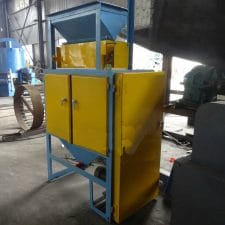
Gold recovery is a critical process in mineral processing, and choosing the right equipment plays a key role in maximizing efficiency and profitability. Among various beneficiation tools, the gold shaking table stands out as a highly effective gravity separation device for recovering fine gold particles from ore.
This article provides a comprehensive guide on gold shaking table selection, covering its working principle, installation, operational considerations, and different types for various applications—whether for coarse, fine, or slime material recovery. We will also explore innovative designs, their suitability for mineral processing plants, and where to find high-quality gold shaking tables for sale.
Shaker Table Working Principle
The working principle of the Shaking Table is separates the heavy material from the light material by using their different proportion & specific gravity. Under the effect of gravity, the minerals will divide into the ore concentrate, the middling, and the tailings.
The prominent advantage of the ore shaking table is precise separation. The enrichment ratio of concentrate is very good, up to 95% high recovery ratio for kinds of heavy minerals. When dealing with low-grade tungsten ore and tin ore, the enrichment ratio could reach about 300 times.
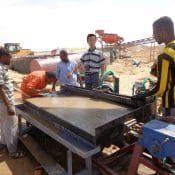
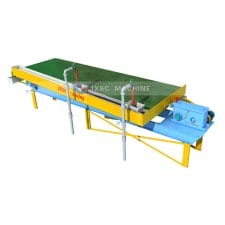
The final pounded or ground mineral material runs as feed blended with water to frame a mash (mud) and is sustained as the slurry of a normal around 20– 25% of solids by weight onto the top purpose of the table deck. The gold table deck has an equal motion along with its fundamental hub that is given utilizing a vibrator or a volatile head movement.
The table surface is made and fitted with a few narrow strips called riffles or channels, frequently made of yellow pine, that lead to back in time, low-thickness polythene or aluminum surfacing. Shaking tables and other thin-film isolating plants recover finely separated gold under terms of subcritical laminar and supercritical laminar flows of the stream, which may happen just where there is a thin depth of liquid.
A gold shaking table’s riffles decrease downwards, rising toward the path the gold and all heavy material, valuable metals, and concentrate release at the end of the table. This encourages the simplicity with which mineral particles can move transversal to the table’s pivot or shaker-line, subsequently helping segregation over the entire table length. Riffle statures and pattern diagrams are chosen in view of the crave and required functioning as anticipated.