



Introduction
Limonite is an iron ore consisting of a mixture of hydrated iron oxide minerals, primarily goethite and lepidocrocite. The iron content is less than that of magnetite and hematite. Still, because of its relatively loose and easy-to-smelt nature, it becomes an important iron ore. Limonite often forms in boggy or swampy areas and is typically yellow to brown.
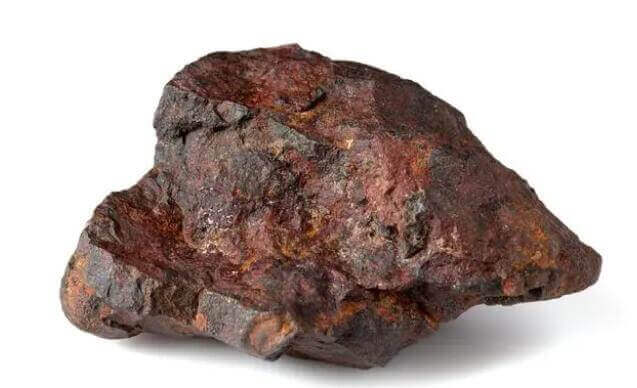
As high-grade iron ore resources continue to decline worldwide, the utilization of low-grade limonite deposits has become increasingly important. However, direct smelting of raw limonite is generally uneconomical because of its high impurity content and poor metallurgical properties. Beneficiation is therefore essential to improve iron grade, remove impurities, and produce a concentrate suitable for ironmaking.
The optimal beneficiation process depends on factors such as mineral composition, particle size distribution, clay content, and the degree of iron mineral liberation. Modern processing plants often combine multiple beneficiation technologies to achieve the highest recovery and concentrate quality.
In this article, we explore five widely used limonite beneficiation methods, explain their working principles, discuss their advantages and limitations, and provide guidance for selecting the most suitable process for different ore types.
The 5 Key Limonite Beneficiation Methods
1.Washing-Screening-Gravity Separation+Strong Magnetic Separation
In this method, the grade and recovery rate of the limonite are improved through multiple steps such as ore washing, screening, gravity separation, and strong magnetic separation. First, the soil, impurities, and other substances in the limonite are removed by ore washing and then sieved to divide the ore into different particle sizes. Then, re-election is carried out, and the ore with a lower grade is sorted again to increase the grade. Then, the strong magnetic separation method is used to separate the magnetic substances in the ore and improve the recovery rate.
Ore washing is one of the important steps in the beneficiation process. The purpose is to remove the soil, impurities, and other substances in the ore and improve the grade of the ore. There are many methods of ore washing. The common ones are water washing, dense medium separation, airflow separation, etc. In the beneficiation of limonite, washing with water is often used. The ore is soaked in water, and then the soil, impurities, and other substances are removed through a vibrating screen.
Sieving is the process of separating ore according to particle size. In limonite beneficiation, vibrating screens are generally used for screening to divide ore into different particle sizes. Gravity separation is the process of re-sorting lower-grade ores to improve the grade. In the beneficiation of limonite, we generally adopt the method of dense medium separation in gravity separation of ore; the ore is soaked in the dense medium, and the ore with lower grade is separated by using the difference in density.
Strong magnetic separation realizes the separation of minerals through the difference in magnetic properties. In limonite beneficiation, strong magnetic separation can be used to separate limonite from other minerals. But this requires using a strong magnetic field to separate the magnetic material, and then going through a separator to separate it from other minerals.
2. Flotation
The flotation method realizes the separation of minerals through the difference in physical and chemical properties of the mineral surface. In limonite beneficiation, flotation can separate limonite from other minerals. The method involves using a flotation agent to float the limonite, which is then passed through a separator to separate it from other minerals.
The flotation agent is an important substance in the flotation process, and its function is to make limonite float and separate from other minerals. Common flotation agents include xanthate, acetone, cetyltrimethylammonium bromide, etc. In limonite beneficiation, yellow water is generally used as a flotation agent to float limonite, and then the separator separates it from other minerals.
3. Strong Magnetic Separation
The strong magnetic separation method realizes the separation of minerals according to the difference in magnetic properties. In limonite beneficiation, strong magnetic separation can separate limonite from other minerals. The method requires a strong magnetic field to separate the magnetic material, which is then passed through a separator to separate it from other minerals.
The strong magnetic separation method is an efficient and energy-saving mineral processing method. Its advantages are a good separation effect, a high recovery rate, and easy operation. In limonite beneficiation, strong magnetic separation can separate limonite from other minerals and improve the grade and recovery rate of limonite.
4. Selective Flocculation-Strong Magnetic Separation
The selective flocculation-strong magnetic separation method uses a selective flocculant to separate limonite and other minerals. The method requires selective flocculants to separate the limonite and other minerals, followed by a strong magnetic field to separate the magnetic material.
Selective flocculants are special flotation agents that separate limonite. In limonite beneficiation, selective flocculants can selectively adsorb limonite and separate it from other minerals through a strong magnetic field.
5. Reduction Magnetization Roasting-Weak Magnetic Separation
The reduction magnetization roasting-weak magnetic separation method separates limonite and other minerals through reduction magnetization roasting. This requires the reduction and magnetization roasting of limonite to convert it into a magnetic substance, and then separate it from other minerals through a weak magnetic field.
Reduction magnetization roasting is when ores are subjected to high-temperature heat treatment in a reducing atmosphere to convert them into magnetic substances. In limonite beneficiation, reduction magnetization roasting can convert limonite into magnetic substances, separating it from other minerals by a weak magnetic field.
Generally speaking, the five limonite beneficiation methods I mentioned above have their advantages and disadvantages. The specific beneficiation method used for limonite can depend on factors such as the mineralogy of the ore, the impurity content, the desired iron content, and the intended end-use of the processed material. Different combinations of these methods might be employed to achieve the best results for a particular limonite ore deposit.
1000TPD Limonite Crushing And Beneficiation Process
Looking for a customized limonite beneficiation solution? Our engineering team provides comprehensive services, including ore sample testing, mineral processing experiments, flowsheet design, equipment selection, plant layout, EPC project implementation, installation, and technical support. Contact us today to discuss your project and discover how a tailor-made limonite processing solution can help you increase recovery, improve concentrate quality, and maximize your return on investment.
LATEST PRODUCTS
-

High Temperature & Pressure Gold Desorption Electrolysis System
High-Temperature & Pressure Gold Desorption Elect…
-
Normal Temperature & Pressure Gold Desorption Electrolysis System
The normal temperature & pressure gold desorption…
-
ABS Spiral Chutes
【Capacity】0.15-6 tph 【Feeding Size】0.02-…


LATEST NEWS
- What Is Over-Grinding and How Can It Be Prevented?
- Fluorspar vs Graphite vs Quartz: Non-Metal Minerals Beneficiation Differences
- Tailings Dam Safety: 5 Critical Parameters to Monitor
- What Is the Beneficiation Process for Ultra-pure Iron Concentrate?
- How to Comprehensively Recover Valuable Metals from Copper Slag?
 English
  French
  Spanish
  Portuguese
  Indonesian