



In the previous article, we conducted an in-depth analysis of the first three froth abnormality signals: “large and brittle” (indicating insufficient mineralization), “sticky and lifeless” (suggesting severe entrainment), and “fine and glossy” (reflecting slime interference). These signals primarily represent issues related to reagent regimes and pulp properties. This article extends the diagnostic framework, focusing on the latter four more complex froth abnormalities: “abnormal color” (an indicator of ore variability), “high and turbulent” (a red flag for system imbalance), “low and collapsed” (signaling insufficient flotation kinetics), and “uneven distribution” (pointing to mechanical or flow field problems). These signals often involve equipment performance and system control parameters, requiring a more holistic analytical perspective and precise adjustment strategies. Let us decode these “distress signals” from the flotation system.
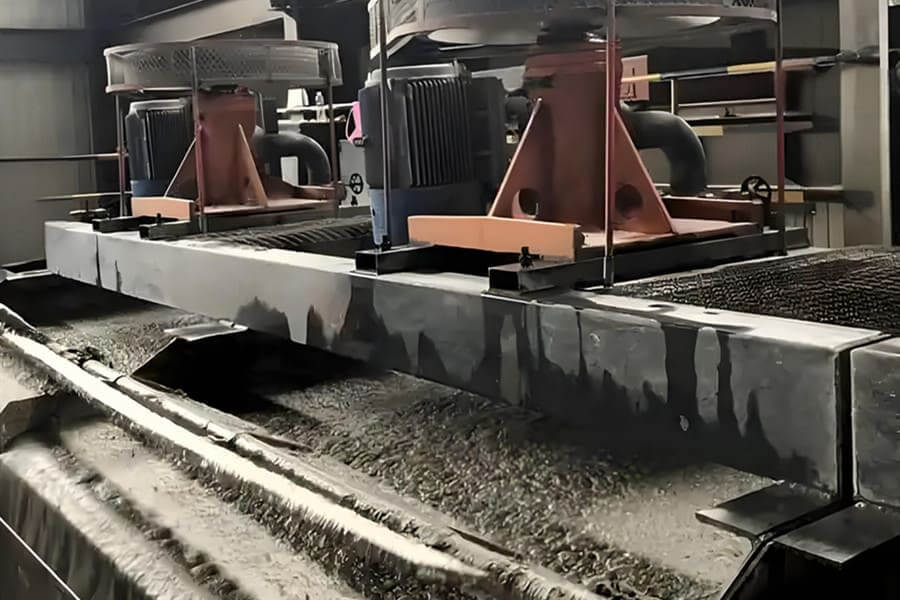
Abnormal Flotation Foam: Abnormal Color, High & Turbulent, Low & Collasped, Uneven Distribution
1. Foam “Abnormal Color”
– Direct reflection of ore variation
Features: The color of the foam is significantly different from that during normal production. For example, the foam of copper concentrate changes from normal brass color to gray-black, or the foam of lead-zinc ore appears yellow when it should not.
Reasons and Diagnosis
Color is a direct reflection of the true color of the mineral. Abnormal color directly points to changes in the properties of the feed or interference from gangue minerals.
- Changes in ore type or oxidation rate: The mining vein changes, and ores of different ore types are entered, or the proportion of high oxidation rate ores increases (such as chalcopyrite darkening after oxidation).
Diagnosis: Immediately take feed samples for hand selection or petrographic identification, and contact local mining to confirm the ore source. - Harmful elements/gangue float: Some suppressed gangue (such as pyrite, carbonaceous, talc, etc.) is activated and enters the foam in large quantities.
Diagnosis: Check whether the inhibitor system fails (such as pH fluctuations) or the collector selectivity deteriorates. - Reagent contamination: Wrong reagents (such as oils) mixed into the system can also cause abnormal foam color.
Precise Countermeasures
Quick response: Once an abnormal color is found, take samples and analyze them immediately, and communicate with relevant positions to determine the cause.
Reagent adjustment: Targeted adjustment of the reagent system. If pyrite floats, it is necessary to enhance inhibition (increase pH or add lime); if it is due to carbonaceous minerals, special inhibitors (such as CMC, dextrin) need to be added.
Diversion treatment: If a specific batch of inferior ore causes it, if conditions permit, it should be considered to be stored separately or mixed with other ores.
2. Foam “High and Turbulent”
– “Red card” warning of system imbalance
Features: The foam layer increases sharply and quickly overflows the edge of the trough, causing a large amount of concentrate to “run away from the trough,” and the site is in a mess.
Reasons and Diagnosis
This is a manifestation of a serious mismatch between the system’s instantaneous processing capacity and output.
- The feed grade suddenly increases significantly: “Rich ore” suddenly arrives, the amount of floatable ore per unit time surges, the foam mineralization degree is extremely high, and the volume expands rapidly.
- Instantaneous excess of frother or collector: Failure of the dosing pump, sudden unblocking of the pipeline after blockage, or manual operation errors, resulting in a large amount of reagents entering the flotation machine in a short period.
- Excessive inflation: The inflation valve is opened too large by mistake.
- Frothing mechanism failure or slow speed: The scraper stops, is damaged, or the speed cannot keep up with the speed of foam generation.
Precise Countermeasures
Emergency treatment:
- Immediately reduce the inflation volume, which is the fastest and most effective temporary measure.
- Temporarily stop or significantly reduce the addition of foaming agents and collectors.
- Increase the scraper speed and check whether it is operating normally.
- Spray a small amount of clean water or special defoamer in the tank to quickly reduce the foam height.
Recovery and prevention: After the foam stabilizes, gradually restore normal operating parameters. Strengthen equipment inspections, especially the dosing system and scraper mechanism, to prevent such accidents.
3. Foam “Low and Collapsed”
– a sign of insufficient flotation power
Features: The entire tank surface has little foam, the liquid surface is exposed, and even if there is a small amount of foam, it quickly breaks and disappears, and a stable foam layer cannot be formed and commonly known as “tank collapse”.
Reasons and Diagnosis
In contrast to “high and surging”, this is a manifestation of a serious lack of flotation power.
- Seriously insufficient or interrupted use of frother: This is the most direct reason. There is not enough frother to reduce the surface tension of water, and stable bubbles cannot be formed.
- The feed grade is too low or the ore is interrupted: There are almost no floatable minerals in the slurry, and mineralized foam cannot be formed.
- Harmful substances enter: Oils (such as lubricating oil leaked from equipment) are strong defoamers, and a small amount of entry can cause “tank collapse”.
- Sudden changes in slurry pH: Sudden changes in pH (usually a sharp drop) may undermine the effectiveness of the reagent.
Precise Countermeasures
Priority inspection: Immediately check whether the frother pump is working properly and whether there is medicine in the medicine box.
Adjustment of medication: After confirming that the reagent system is correct, increase the amount of foaming agent appropriately and observe the recovery of the foam.
Check the source of pollution: Check whether the equipment has oil leakage, and check whether abnormal materials have entered the system.
Stabilize the process: Check the pH online monitoring instrument to ensure that the pH value is stable within the process requirements.
4. Foam “UnevenDistribution”
– Indicator of mechanical or flow field problems
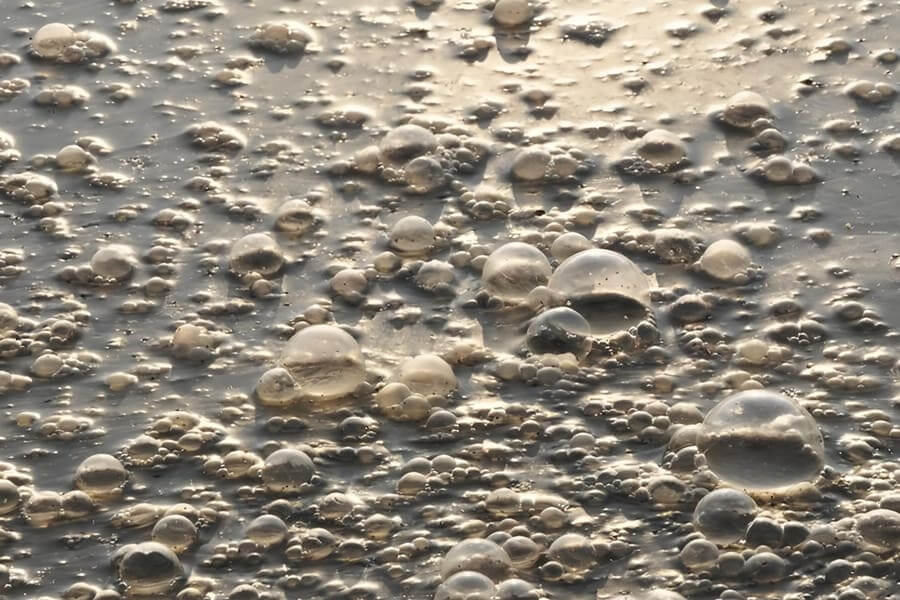
Features: In a row of flotation cells, or in different areas of a single flotation machine, the foam state varies greatly. Some areas have normal foam, some areas have “flowers”, and some areas have “dead corners” without foam.
Reasons and Diagnosis
This unevenness is most likely a mechanical failure or a flow field problem.
- Uneven inflation: The inflation pipeline inside a single flotation machine is blocked, or the gas distribution main pipe of the entire row of flotation cells is uneven, resulting in differences in inflation volume in each cell or area.
- Impeller-stator wear: The impeller and stator, the core components of the flotation machine, are seriously worn, resulting in a decrease in their ability to stir and disperse bubbles, forming a “dead zone”.
- Slurry short circuit or siltation: The trough body is not designed reasonably, the inlet and outlet are blocked or worn, causing abnormal slurry flow in the trough, and the slurry residence time in some areas is too long or too short.
- Uneven distribution of ore: The ore distributor fails, resulting in inconsistent slurry volume and concentration entering the parallel series of flotation cells.
Precise Countermeasures
Shutdown and maintenance are the key: Such problems usually cannot be solved by online adjustment. A planned shutdown is required.
Check one by one:
- Check the aeration system: Clear the blocked aeration pipeline and calibrate the valve opening of each slot.
- Check the impeller stator: Measure the gap between the impeller and the stator, and replace or repair the parts with excessive wear.
- Clean the trough: Clean the siltation at the bottom of the trough, check and repair the inlet and outlet.
- Calibrate the distributor: Ensure that the feed is evenly distributed to each series.
Conclusion
Together with the previous article, this analysis completes the diagnostic framework for the seven key froth abnormality signals. From “abnormal color” to “uneven distribution,” these four newly discussed signals, along with the prior three, provide a comprehensive observation matrix for assessing flotation process conditions.
In practice, these signals often appear in combination, requiring engineers to consider their interrelationships. For example:
- “High and turbulent” may co-occur with “large and brittle,” indicating both insufficient mineralization and uneven bubble size distribution.
- “Sticky and lifeless” alongside “abnormal color” could imply deterioration in selectivity due to changes in ore characteristics.
Flotation process optimization resembles a “balancing art” that must address both manifest problems and underlying risks. We recommend establishing a systematic froth observation logbook, integrating qualitative analysis with quantitative measurements. By accumulating data, more precise diagnostic benchmarks can be developed, ultimately enabling comprehensive flotation process optimization.
LATEST PRODUCTS
-

Inclined Vibrating Screen
The inclined vibrating screen is a simple and eff…
-
High Temperature & Pressure Gold Desorption Electrolysis System
High-Temperature & Pressure Gold Desorption Elect…
-
Normal Temperature & Pressure Gold Desorption Electrolysis System
The normal temperature & pressure gold desorption…


LATEST NEWS
- Modern Cyanide Residue Treatment Technologies for Gold Processing
- Traditional De-cyanidation Technologies for Gold Cyanide Residues
- Shaking Table, 3-Disc Dry Magnetic & Electrostatic Separator for W-Sn-Ta-Nb
- Mineral Analysis: The Foundation for Successful Mineral Processing Projects
- What Is Over-Grinding and How Can It Be Prevented?
 English
  French
  Spanish
  Portuguese
  Indonesian