



Diesel Generator Set Maintenance Manual
Introduction
Diesel generator sets serve as critical backup or primary power sources, ensuring uninterrupted power supply in industrial, commercial, and emergency applications. Proper maintenance is essential to guarantee reliable performance, extend equipment lifespan, and prevent unexpected failures.
This manual provides a comprehensive guide to routine maintenance tasks, troubleshooting procedures, and best practices for diesel generator sets.
1. Engine Maintenance
The engine is the core component of a diesel generator set. Regular maintenance ensures optimal performance and prevents premature wear.
Pre-Startup Checks (Each Startup)
- Check the oil level
- Check coolant level
- Check the air filter blocked indicator
- Check the radiator and external ventilation
- Check the engine drive belt group
- Check the fuel supply situation
A long line of units should be checked once every 6 to 8 hours after the shutdown of the standby unit, required to check all aspects.
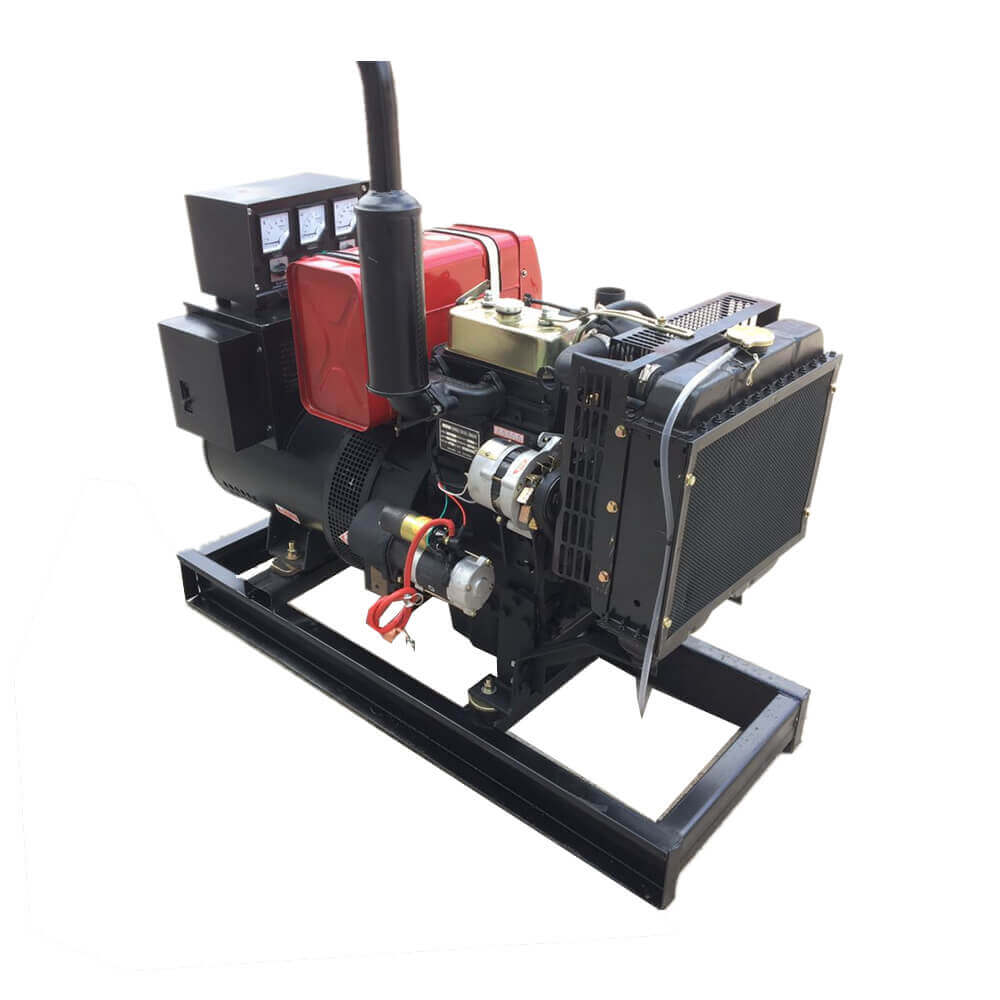
Periodic Maintenance Schedule
The new units run from 200 to 300 hours
- Check the valve clearance
- Check the injector equipment
Each run 50 hours
- Emissions from oil-water separator in water
- Check the starter battery electrolyte-bit
Each run from 50 to 600 hours, or at least every 12 months
- Replacement of oil and oil filter
Different according to the quality of lubricating oil and fuel sulfur content and engine lubricant consumption, the cycle of replacement of oil for each unit will be different.
Each run 400 hours
- Check and adjust drive belt, replace if necessary
- Check the radiator chip for cleaning
- Emissions from the fuel tank sludge matter
Each run 800 hours
- Replacement of oil-water separator
- Replace the fuel filter
- Check the turbo for leaks
- Check the air intake pipe for leaks
- Check and clean the fuel pipeline
Each run is 1200 hours
- Adjust valve clearance
Each run is 2000 hours - Replace the air filter
- Replacing the coolant
- Thoroughly clean the water tank cooling chip and waterways
Each run is 2400 hours
- Check the injector
- A thorough examination and cleaning of the turbocharger
- Comprehensive inspection of the engine equipment
2. Generator Maintenance
Inside and outside of the alternator should be regularly cleaned, and cleaning frequency would depend on the unit and the environment. When cleaning is required, proceed as follows: disconnect all power to wipe all the appearance of dust, dirt, grease, water, or any liquid, mesh ventilation should be clean, because these things into the coil, it will coil overheating or damage to insulation. Best dust and dirt with a vacuum cleaner sucks it off, do not blow or high-pressure water jet to clean.
Resurgence required generator caused by the insulation resistance is lowered, the generator must be dried, drying approach and detailed maintenance refer to the random generator and maintenance manual.
3. Control Panel Maintenance
The unit control panel routine maintenance should ensure that the cleaning of the surface so that the instrument display is a clear and intuitive, flexible, and reliable operating button.
Unit in operation, vibration can cause the control panel meter zero deviation from the fasteners to lose, so the control screen calibration, fastening fittings, connect the linework on a regular basis is necessary.
The maintenance unit control panel must be in the detailed understanding of the control screen principle (see randomized controlled screen manual) before implementation.
4. Start Battery Maintenance
Long-term storage battery before use must be given the appropriate charge, in order to ensure the normal capacity of the battery. (Hydrometer to detect the actual capacity of the battery).
Normal operation and charging will lead to some water inside the battery are evaporated, which requires frequent battery rehydration fluid before, we should first clean filler dirt around, to prevent their falling into the battery cell, and then fill the mouth open, by adding an appropriate amount of distilled water or purified water, not to add too full (to the extreme battery plate scale standard), otherwise, the battery discharge / recharge the internal electrolyte gush from the mouth of the overflow hole, plus clear, corrosion damage caused by surrounding objects, and the environment.
Avoid the battery to start the unit at low temperature, low-temperature environment, the battery capacity will not be the normal output, and for a long time to discharge may be caused by battery failure (cracking or explosion).
Standby unit battery should be regular maintenance charge the battery, we recommend users to buy the battery float charger.
5. Maintenance records
User every time a detailed record of maintenance must be done.
Complete maintenance records are the basis of the maintenance unit, the unit can be a legitimate sale (warranty) the necessary conditions of service.
Maintenance log
| Unit Model: | Engine Model: | Generator Model: | |||
| Unit Number: | Engine Number: | Generator Number: | |||
| Maintenance reasons: (regular maintenance, or failure to maintain) | |||||
| Replacement Parts | Maintenance | Check and adjust | Cleaning and Maintenance | Others | |
| Maintenance Conclusion: | |||||
| Maintain Officers Signature: | |||||
6. Common Fault Lookup Table
Conclusion
Rigorous and regular maintenance is essential to ensure the generator’s maximum operational safety, extended service life, and reliable performance. By strictly adhering to maintenance guidelines and keeping detailed records, you not only prevent unexpected breakdowns and costly repairs but also minimize environmental impact due to inefficient or malfunctioning equipment. Proactive maintenance, supported by a structured schedule and manufacturer recommendations, guarantees optimal performance while reducing operational downtime.
For ongoing reliability, always follow prescribed maintenance procedures and consult technical support when needed.
Additional Resources:
Diesel Generator Set Installation
LATEST PRODUCTS
-

Inclined Vibrating Screen
The inclined vibrating screen is a simple and eff…
-
High Temperature & Pressure Gold Desorption Electrolysis System
High-Temperature & Pressure Gold Desorption Elect…
-
Normal Temperature & Pressure Gold Desorption Electrolysis System
The normal temperature & pressure gold desorption…


LATEST NEWS
- Traditional De-cyanidation Technologies for Gold Cyanide Residues
- Shaking Table, 3-Disc Dry Magnetic & Electrostatic Separator for W-Sn-Ta-Nb
- Mineral Analysis: The Foundation for Successful Mineral Processing Projects
- What Is Over-Grinding and How Can It Be Prevented?
- Fluorspar vs Graphite vs Quartz: Non-Metal Minerals Beneficiation Differences
 English
  French
  Spanish
  Portuguese
  Indonesian