



Have you noticed your mineral processing plant consuming more energy than usual? Or perhaps your final product quality is inconsistent? The culprit might be over-grinding. This common issue wastes resources and damages your bottom line. Let’s explore how to spot and stop it.
Over-grinding happens when ore particles are crushed beyond the optimal size, wasting energy and reducing recovery rates. It leads to higher operational costs and lower-quality concentrates. The key is to balance grinding intensity with particle liberation. Proper equipment selection and process control can prevent this problem.
Understanding over-grinding is just the first step. Now let’s break down the specifics to help you diagnose and solve this costly issue in your operation.
What is Over-grinding In Mineral Processing?
Imagine running your grinding mills 24/7 only to discover you’ve created ultra-fine particles nobody wants. That’s over-grinding in action – the point where extra crushing stops helping and starts hurting.
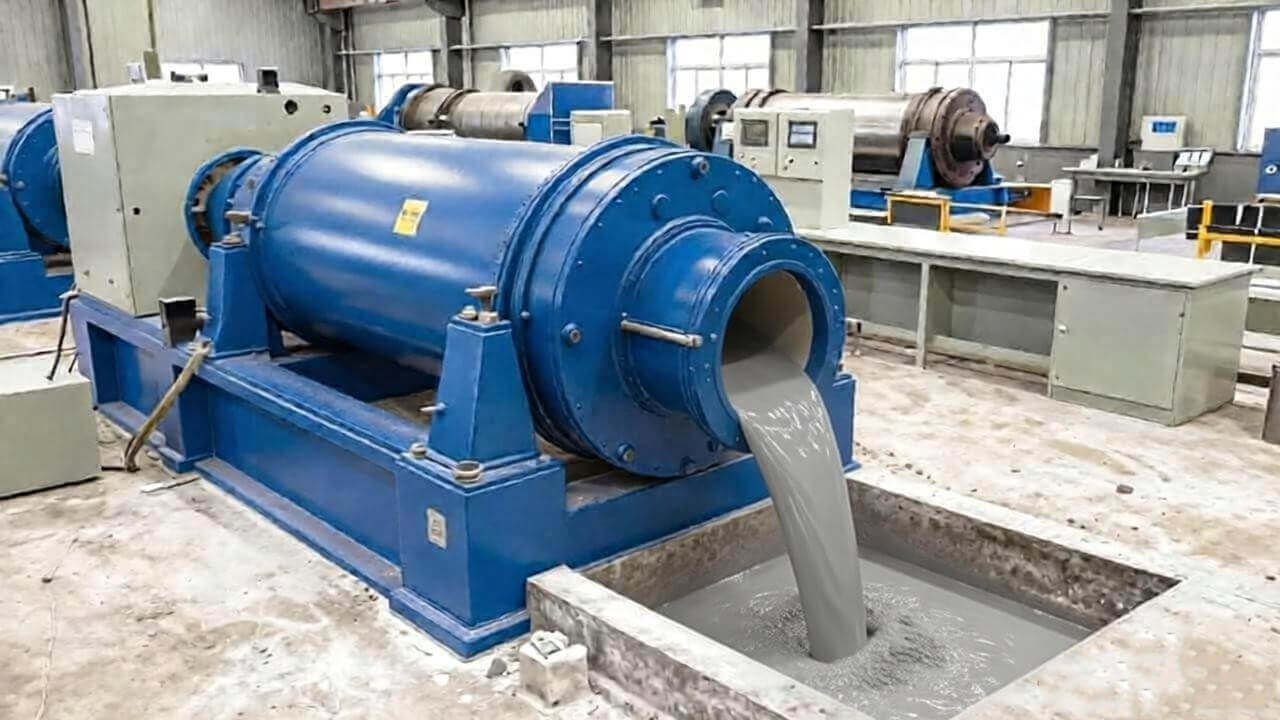
Over-grinding occurs when mineral particles are reduced smaller than necessary for efficient separation. While some grinding liberates valuable minerals, excessive grinding creates slimes that are harder to process. The ideal particle size depends on the mineral type and downstream processes.
Understanding the Grinding Spectrum
Every mineral has an ideal grind size range. Go beyond this, and problems arise:
| Particle Size | Benefit | Problem if Over-Ground |
| Coarse (>150μm) | Easy handling | Poor liberation |
| Medium (75-150μm) | Good separation | Energy waste |
| Fine (<75μm) | High liberation | Slime formation |
Why It Happens
Three main causes create over-grinding situations:
- Equipment mismatch – Using mills designed for finer grinding than needed
- Long retention times – Material stays in grinding circuits too long
- Overloading classifiers – When sizing equipment can’t remove fines fast enough
The Hidden Costs
I once visited a copper mine wasting $12,000 daily on unnecessary grinding. Their mills were set to produce 80% passing 75μm, but 50μm would’ve been sufficient. The extra energy and reagent costs added up fast.
How to Determine if Over-grinding Has Occurred?
Waiting for lab results is too slow – your plant could lose thousands before the reports arrive. Smart operators spot over-grinding through immediate, observable signs.
These 5 telltale signals help detect over-grinding in real-time before lab confirmation:
- Mill sounds change: Normally crisp grinding noises turn dull as fines increase.
- Power spikes: Motors draw more current to grind excessive fines.
- Foam gets sticky: Flotation bubbles thicken when slimes interfere.
- Filters clog: Suddenly clinging filter cakes signal fine overload.
- Chemicals vanish: Reagent consumption jumps without benefit.
The Field Detection Toolkit
1. Listen to Your Mill
Every grinding operator should recognize their mill’s “healthy” sound
- Normal: Clear, rhythmic steel-on-stone impacts. The main motor current, feed rate, and discharge conditions all remain stable, fluctuating only within a narrow range.
- Over-grinding: Muted thuds with weaker vibration At the same time, if there is an asynchronous deviation in the motor current, mill load, and feed rate, it indicates that the material conditions inside the mill are no longer optimal—this could be due to over-grinding, resulting in an increase in fine slurry and a decrease in the efficiency of the steel balls, or it could be due to changes in feed concentration, ore hardness, or steel ball size distribution.
Troubleshooting Approach: Immediately cross-check changes in feed rate, slurry concentration, and sand return volume, and make a comprehensive assessment based on these data in conjunction with recent records of adjustments to ore properties; finally, confirm the results through overflow particle size analysis.
2. Test Overflow by Hand
A simple cup test beats waiting hours for lab results:
- Scoop fresh cyclone overflow
- Rub between fingers – abnormal slickness means extra fines
- Observe settling – thick top sludge layer confirms slimes
Data Comparison Table:
| Sample Condition | Normal Grind | Over-Ground |
| Texture | Gritty feel | Slippery |
| Settling Time | Moderate (2-3 min) | Slow (5+ min) |
| Sediment Layers | Even distribution | Thick surface slime |
Troubleshooting Approach: First, check the feed pressure, feed concentration, and wear condition of the wear parts in the hydrocyclone to rule out any abnormalities in the classification equipment; then, perform particle size analysis to determine whether the issue stems from the grinding process or the classification process.
3. Watch Flotation Behavior
The froth tells hidden stories:
- Good grind: Mobile, sparkling bubbles
- Over-ground: Sticky foam clinging to cells
Case Example: A lead-zinc plant noticed foam sticking to paddles while grade dropped 1.5%. Quick particle checks revealed 15% more -25μm material than usual.
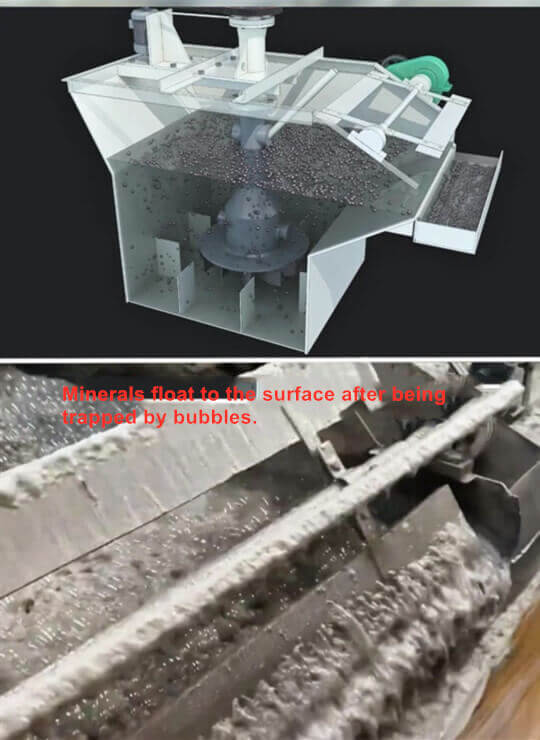
Troubleshooting Approach: Don’t blindly add inhibitors or adjusting agents just because the foam is sticky. First, calculate the concentrate yield, recovery rate, and tailings grade to perform a simple metal balance analysis; then, consider changes in the upstream grinding particle size to determine whether fine slime is causing interference.
4. Monitor Filter Performance
Filter presses react early to grind changes:
- Standard operation: Uniform cake release
- Trouble signs:
- Cloth blinding
- Higher moisture
- Extended cycle times
Maintenance Tip: Rule out filter wear before blaming grind size.
5. Track Chemical Costs
Reagent spikes often point to fines:
- Note baseline consumption
- Watch for unexplained increases
- Confirm with particle checks
Why it matters: Slimes have huge surface area, absorbing chemicals uselessly.
The Diagnosis Sequence
When multiple signs appear:
- Check classifiers first – Often the real culprit
- Review mill parameters – Feed rate, density, power
- Verify with quick tests – Settling, screen shortcuts
- Adjust gradually – Avoid drastic changes
Remember: These signs suggest over-grinding possibilities, not certainties. At our copper client’s site, similar symptoms actually came from faulty cyclone feed pumps. Always verify before major adjustments.
On-Site Troubleshooting Checklist for Grinding Abnormalities
| On-site Anomaly Signals | Priority Verification Process | Final Data Validation |
| Abnormalities in mill noise, current, and load synchronization | Feed rate, slurry concentration, steel ball size distribution | Overflow particle size, throughput, mill efficiency |
| Continuous narrowing of the hydrocyclone overflow | Cyclone pressure, concentration, wear on sand discharge nozzles/overflow pipes | Overflow particle size, classification efficiency, sand return ratio |
| Sticky foam + declining concentrate grade | Chemical dosing regimen, return water quality, slurry pH | Particle size distribution, concentrate/tailings grade, recovery rate |
| Sticky filter cake, increased moisture content | Filter cloth, vacuum level, flocculant dosing regimen | Concentrate particle size, filter cake moisture content, slime content |
| Rising specific chemical consumption + deteriorating performance indicators | Chemical preparation, dosing equipment, raw ore properties | Chemical consumption per unit, particle size distribution, ore mineralogy |
What Are The Key Impacts of Over-grinding?
Seeing your energy meter spin wildly while metal recovery drops? That’s over-grinding stealing your profits. This silent thief works in five destructive ways.
Over-grinding creates costly chain reactions: energy waste +20-30%, +15-40% more reagents, -3-8% metal recovery, plus extra maintenance. The ultra-fines it generates behave like processing vampires – sucking resources while harming results.
The Domino Effect of Excessive Grinding
1. Slime Avalanche
Those invisible ultrafines (<25μm) cause big problems:
- Flotation: Coat bubble surfaces, preventing mineral attachment
- Leaching: Form impermeable slime layers on ore particles
- Settling: Slow thickener operations dramatically
Example: A gold plant’s CIP tanks lost 22% efficiency due to slime coatings. Their P80 had dropped from 85μm to 65μm without operators noticing.
2. Energy Blackhole
Grinding consumes 50-70% of a plant’s power. Over-grinding makes it worse:
| Grind Level | kWh/ton Increase | Annual Cost* |
| Optimal | Baseline | – |
| 10% Over | +18-22% | $420,000 |
| 20% Over | +35-40% | $920,000 |
Based on 10,000 tpd operation at $0.12/kWh
Case Study: A copper concentrator saved $2.8 million/year just by correcting 15% over-grinding.
3. Recovery Killer
That “extra fine grind” often backfires:
- Flotation: Selectivity decreases as slimes interfere
- Gravity Separation: Fine gold escapes with tailings
- Magnetic Separation: Particle interactions weaken
Data Snapshots:
- Lead recovery drops 0.8% per 5μm below optimum
- Iron concentrate grade falls 1.2% with excessive fines
4. Chemical Drain
More surface area = more reagent demand:
- Frothers: +25-50% consumption common
- Collectors: Adsorb uselessly on slimes
- Dispersants: Extra doses needed
We measured a zinc plant spending $11,200 extra monthly on xanthates due to over-grinding.
5. Equipment Abuse
The mechanical toll spreads plant-wide:
- Mill Liners: Wear 30-50% faster
- Pump Impellers: Erode in half the time
- Pipe Elbows: Require 2-3× more replacements
The Hidden Multiplier Effect
These impacts reinforce each other:
Extra fines → Needs more reagents → Creates stickier froths → Further reduces recovery → Requires even finer grinding…
One copper mine traced 37% of their operating cost overruns to this vicious cycle before implementing controls.
Don’t let over-grinding become your profit leak. Spot it early through these impacts and take corrective action. Every micron of unnecessary grinding costs real money – in power, chemicals, metal loss, and equipment life.
How to Prevent Overgrinding in Mineral Processing?
Now for the solution. With the right approach, you can stop over-grinding before it erodes your profits.
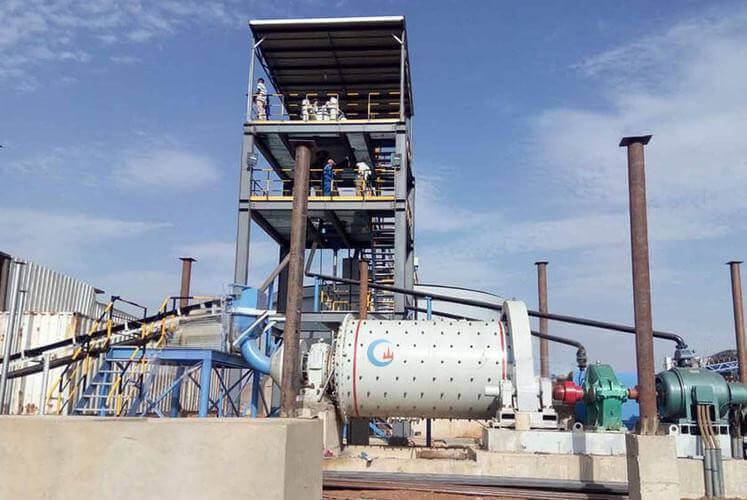
Prevent over-grinding by optimizing mill feed rates, installing modern classifiers, and using grinding aids. Regular particle size monitoring and mill performance audits help maintain ideal grind sizes. Advanced control systems can automatically adjust parameters to avoid excessive fines generation.
Prevention Strategies
Equipment Solutions
- Classifier upgrades
- Replace old cyclones with modern units
- Consider screen classifiers for sharper cuts
- Mill modifications
- Adjust lifter designs
- Optimize ball size distribution
Process Adjustments
| Parameter | Adjustment for Over-Grinding | Expected Benefit |
| Feed rate | Increase where possible | Shorter retention |
| Mill speed | Reduce slightly | Less attrition |
| Pulp density | Increase by 2-5% | Better classification |
Control Techniques
We helped a phosphate plant implement these changes:
- Installed real-time particle size analyzers
- Set up automated mill control logic
- Trained operators on grind size importance
Within months, they reduced -25μm material by 18% and cut energy use by 14%.
Conclusion
Over-grinding wastes energy, reduces recoveries, and increases costs across mineral processing plants. Recognizing the signs early and taking corrective action protects your operation’s efficiency. By monitoring particle sizes, optimizing equipment, and implementing smart controls, you can achieve ideal grind sizing. The result? Better mineral liberation without unnecessary expenses.
LATEST PRODUCTS
-

Inclined Vibrating Screen
The inclined vibrating screen is a simple and eff…
-
High Temperature & Pressure Gold Desorption Electrolysis System
High-Temperature & Pressure Gold Desorption Elect…
-
Normal Temperature & Pressure Gold Desorption Electrolysis System
The normal temperature & pressure gold desorption…


LATEST NEWS
- Traditional De-cyanidation Technologies for Gold Cyanide Residues
- Shaking Table, 3-Disc Dry Magnetic & Electrostatic Separator for W-Sn-Ta-Nb
- Mineral Analysis: The Foundation for Successful Mineral Processing Projects
- What Is Over-Grinding and How Can It Be Prevented?
- Fluorspar vs Graphite vs Quartz: Non-Metal Minerals Beneficiation Differences
 English
  French
  Spanish
  Portuguese
  Indonesian